
How Bench Warrants Work in Isle of Wight County
“Bench warrant” is a familiar name for court-directed process after a missed appearance, an order violation, or another failure to comply. The docket may instead say capias or show cause. In Isle of Wight, the court type follows the case: General District Court for traffic, misdemeanors, and town ordinances; Circuit Court for felony indictment process; and J&DR for juvenile, family, or support matters.
A fine or installment default can also lead to show-cause or capias process under Virginia Code §19.2-358. The court decides what step is required. Ask the clerk for the exact label and the hearing or bond instruction.
Isle of Wight GDC Handles Traffic FTA
General District Court is the county’s main lower-court source for traffic and misdemeanor process. That includes town traffic and ordinance matters from Smithfield and Windsor, since neither town has its own municipal court. The GDC clerk page lists the court’s hours, contact, and schedule. Ask the clerk whether a missed date produced a capias, warrant, or a new setting.
The clerk’s page distinguishes court sessions, but those published times are not a walk-in warrant docket. Confirm where and when the matter can be heard before appearing.
The General District Court page is the local clerk route for FTA questions.
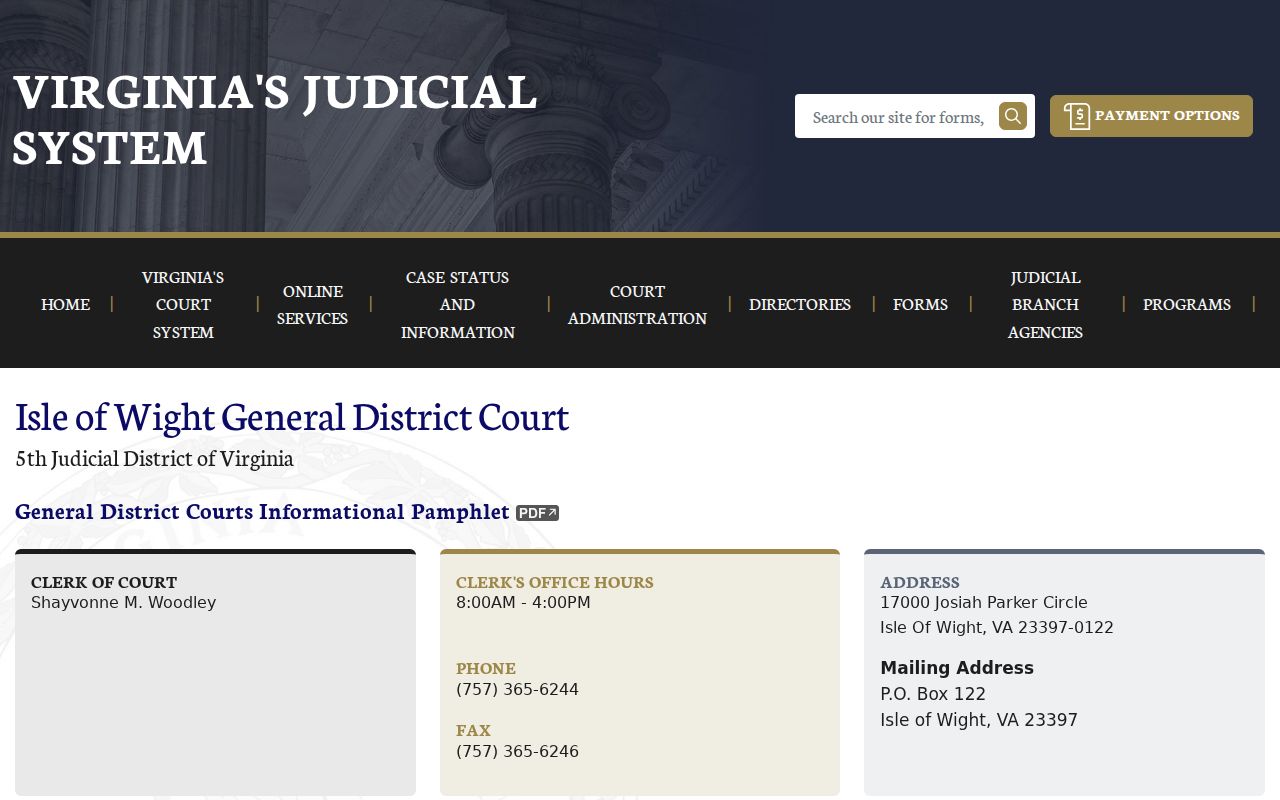
Call the clerk for the exact docket term and next step.
Bench Warrant Issuance in Isle of Wight County
The issuing court depends on the underlying case, not just the person’s town of residence. General District Court handles most traffic and misdemeanor matters. Circuit Court handles felony indictment process. J&DR keeps juvenile and family files, which have special public-access limits. If a case has moved between courts, ask which clerk currently holds the active docket.
A judge or judicial officer may direct further process when a person misses a required appearance or violates a release condition. Virginia Code §19.2-123 allows a capias or show-cause order after a release-condition violation. A failure to appear can also carry separate consequences under §19.2-128. The court record controls; a general search result cannot explain why the process was issued.
Once issued, the process can be served by the Sheriff, town police, State Police, or another authorized Virginia officer. OCIS may show related case activity, but it is not a complete warrant database. The issuing clerk can confirm whether the process is active or recalled.
Capias and Bench Warrant Labels Differ
Virginia law provides for a capias after an indictment, while failure-to-appear rules address separate court events. A capias may direct an officer to arrest and bring an accused before court; a summons or show-cause order has a different purpose. The label on a docket matters for the next appearance and service route. Ask the clerk to read the entry in context rather than assuming two process names mean the same thing.
Virginia uses “capias” for several court-directed processes. A felony indictment produces a Circuit Court capias under Virginia Code §19.2-232. A misdemeanor may use a capias or summons, and a capias may follow a failed summons. In other situations, the docket may record a show-cause order or FTA process.
These labels are not interchangeable. The Circuit Court Clerk handles felony and indictment files, while the GDC clerk handles traffic and misdemeanor cases. Ask which court issued the process before seeking a recall or new date.
The Circuit Clerk page identifies the court that controls felony capias records.
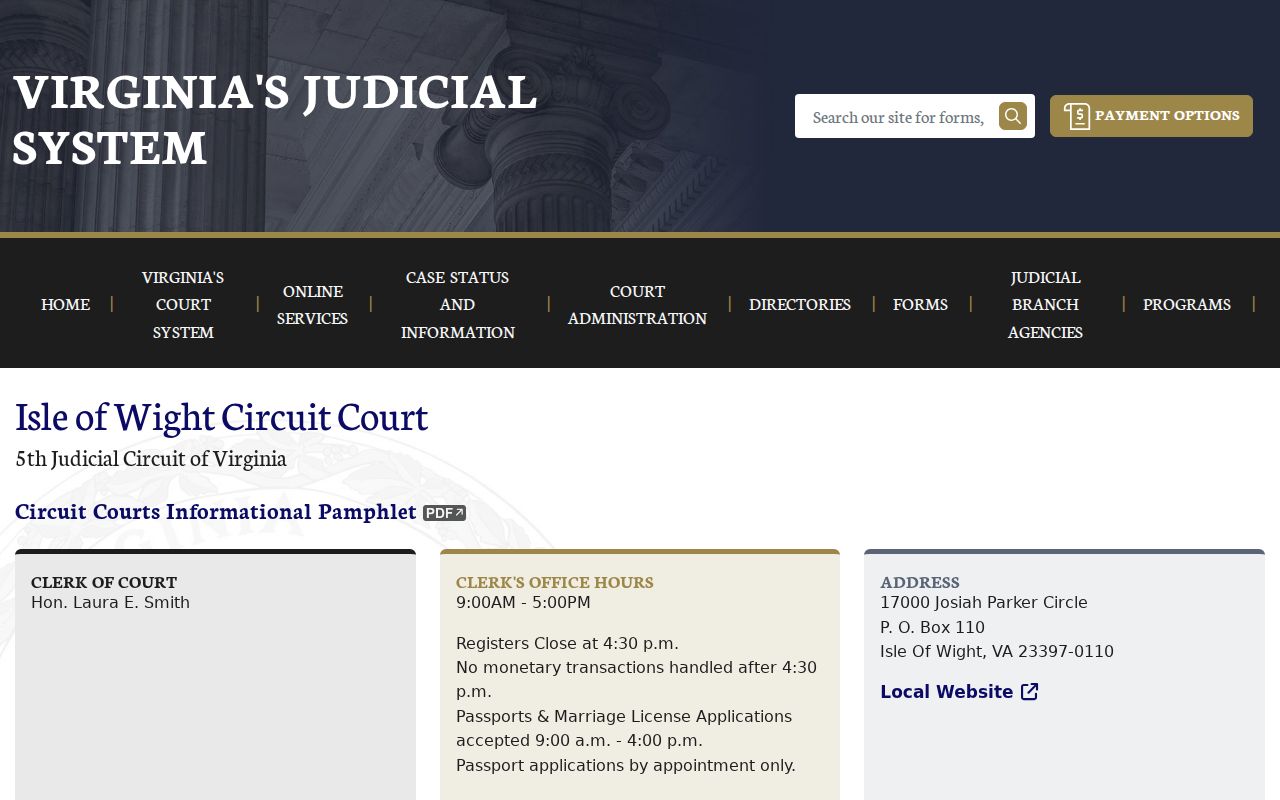
Use the clerk’s docket term when discussing a felony case.
How Bench and Arrest Warrants Differ
A bench warrant generally follows a court event or failure to obey a court direction. An arrest warrant begins with a complaint and probable-cause review. They can lead to similar service actions, but the triggering record and issuing route differ. The General District or Circuit clerk can identify the court process, while the Sheriff or town police can answer a service question if the agency holds the assignment.
A bench warrant follows a court obligation, such as a missed date or violated order. An arrest warrant begins with probable cause for an alleged offense. Both can lead to arrest, but the reason and the office that holds the case differ. The same person may also have more than one case or process.
| Feature | Bench Warrant | Arrest Warrant |
|---|---|---|
| Trigger | Missed appearance, order, or release condition | Probable cause for an offense |
| Issuing route | Judge or judicial officer in the existing case | Magistrate or authorized officer after review |
| Underlying file | Existing court case or obligation | Complaint, charge, or criminal case |
| Next step | Confirm appearance, recall, bond, or show cause | Confirm counsel, surrender, bond, or court date |
Isle of Wight Bond Hearings Need Routing
The General District Court’s public guidance says a bond hearing is arranged by an attorney with agreement from the Commonwealth’s Attorney. The sources reviewed do not publish a countywide bond schedule or a standard amount for a bench warrant. Ask the clerk whether a hearing must be scheduled and what filing or appearance applies. Do not assume that paying a fine automatically recalls a separate court process.
The General District Court page says bond hearings are scheduled by an attorney on Wednesday or Thursday and require Commonwealth agreement. It does not publish a blanket walk-in warrant hearing. If a bench warrant is active, call the clerk and ask whether counsel must arrange a hearing or whether the judge requires an appearance.
Do not rely on the ordinary court calendar as a promise that the warrant can be resolved that day. The amount and type of bond are case-specific, and no countywide bond schedule was located.
Clearing a Bench Warrant in Isle of Wight County
Start by finding the issuing court and asking what action the judge requires. Counsel can ask about a motion to recall or quash, an arranged surrender, or a new court date. If surrender is directed, the Sheriff’s page says most people can be processed and bonded at the office; transfer to Western Tidewater Regional Jail may follow if bond cannot be set or paid.
- Search the case if available and write down the case number and last hearing date.
- Call the GDC, Circuit, or J&DR clerk that owns the file and ask for the exact process label.
- Ask counsel or the clerk about a motion, bond hearing, new setting, payment, or required appearance.
- After the court acts, keep the order or receipt and confirm that the docket and any DMV notice were updated.
Caution: Do not assume a paid balance or a new hearing date recalled the warrant; ask the issuing clerk to confirm the court’s current status.
No Isle of Wight Recall Form Was Located
The statewide General District forms page lists traffic and criminal forms, but the research did not find an Isle-specific motion-to-recall or warrant-clearing form. The Circuit Court publishes motion information, yet no local warrant-motion fee or automatic recall process was found. Ask the clerk which filing, if any, fits the case.
The Virginia district forms index is a general source, not proof that a particular form clears a warrant. A clerk or lawyer can explain whether the judge must review a request.
The court forms index is a starting point for current traffic and criminal forms.
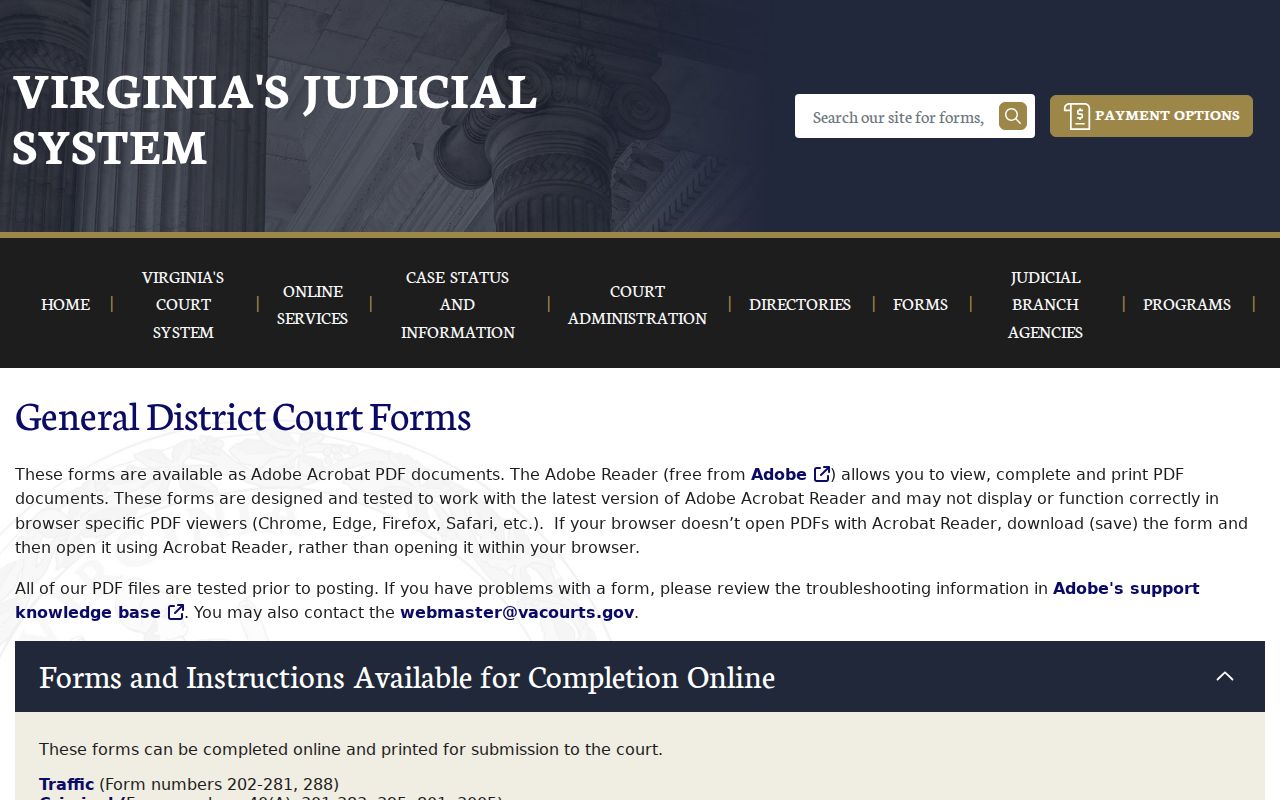
Confirm with the local clerk before filing or paying.
Isle of Wight County Courts That Issue Bench Warrants
The General District Court is the first call for traffic, misdemeanor, and town-ordinance FTA matters. Circuit Court handles felony indictment process. J&DR holds juvenile, family, and support files, where public access is limited. Smithfield and Windsor do not have separate municipal-court clerks for these matters.
The J&DR Court handles a different set of cases from the adult county list.
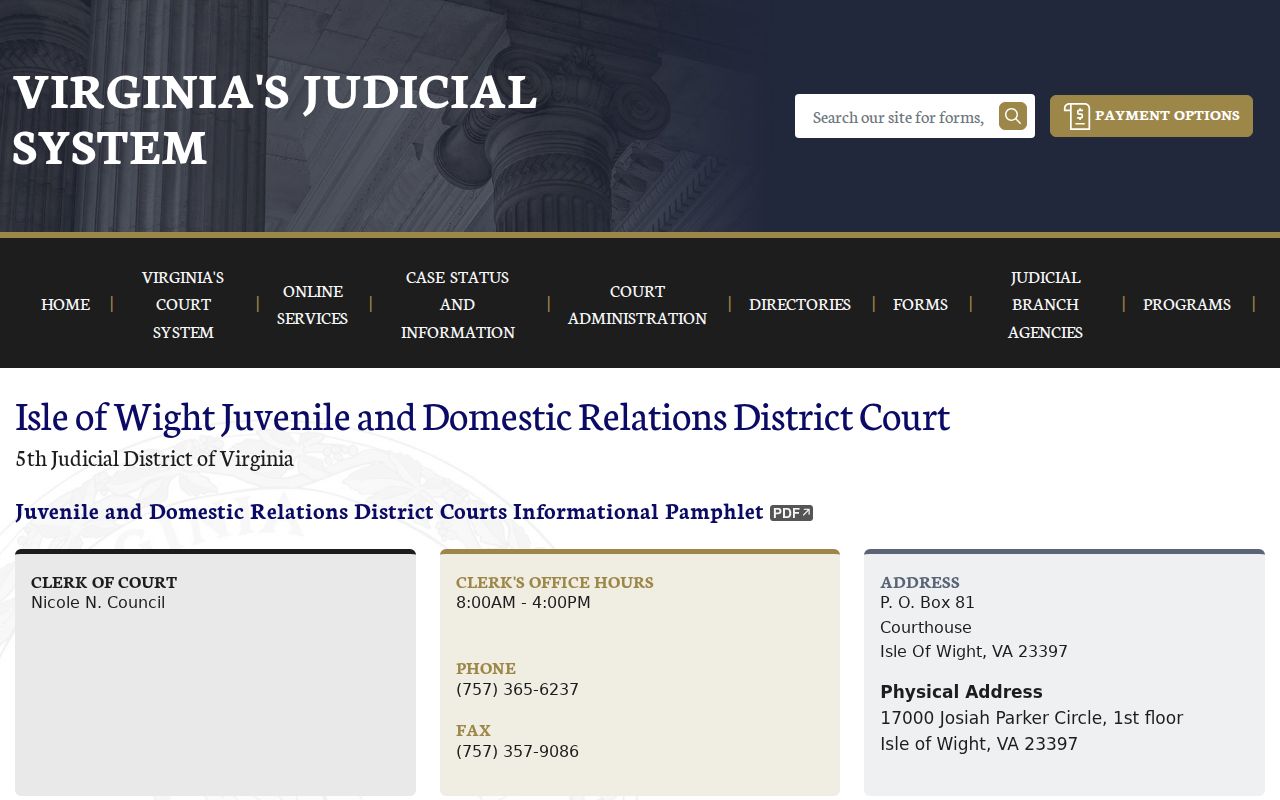
Call the J&DR Clerk about the court’s access rules and case routing.
Isle of Wight Clerk Desks Follow Case Type
For a General District traffic or misdemeanor case, contact Clerk Shayvonne M. Woodley at 757-365-6244. That counter is at 17000 Josiah Parker Circle and is open 8 a.m. to 4 p.m. Circuit Court matters go to Clerk Laura E. Smith at 757-365-6233; the Circuit Clerk’s office at the same address is open 9 a.m. to 5 p.m., with monetary filings ending at 4:30 p.m.
For juvenile or domestic matters, call J&DR Clerk Nicole N. Council at 757-365-6237. That office is on the courthouse’s first floor and is open 8 a.m. to 4 p.m. Juvenile files have separate access limits, so a public search may not show the case. Give the clerk the court date or case number if available, and ask what the current docket records.