
How Traffic Warrants Work in Isle of Wight County
A traffic summons sets a court date or other compliance instruction. If a person fails to appear or comply, Virginia Code §46.2-938 allows a warrant and related court notice to DMV. The warrant returns to the court with jurisdiction. A license consequence is separate from the court case and does not replace the clerk’s process instructions.
Isle of Wight General District Court hears traffic, misdemeanor, and county or town ordinance cases. A Smithfield or Windsor ticket therefore belongs in the county GDC system, not a town municipal-court portal.
Town Tickets Still Use Isle of Wight GDC
Virginia law routes town traffic and ordinance matters through the county General District Court rather than a separate Smithfield or Windsor municipal bench. A town citation may still have been written or served by local police, so the agency and the court can hold different pieces of the record. Use the citation to identify the court case, then contact the clerk for the docket and local police for an agency question.
Smithfield and Windsor have separate police departments, but neither town has its own municipal court. Virginia Code §16.1-123.1 gives the county General District Court jurisdiction over town traffic and ordinance matters. A town officer may issue or serve process, while the GDC clerk controls the court case and confirms its status.
For town-specific routing, the city-court warrant page explains the police and court split. For a particular citation, use the court named on the notice and verify with the clerk.
Isle of Wight County Traffic Warrant Checks
Start with a court case search if you know the driver’s legal name, case number, or hearing date. Choose Isle of Wight in the General District locality selector for a county traffic file. The court’s Case Details may show entered service information, but the search does not advertise a dedicated warrant field. Ask the clerk to confirm whether process remains active and what compliance the judge expects.
Search the Virginia General District Court case system by selecting Isle of Wight and using a name, case number, or known hearing date. The interface is case information, not a DMV query or warrant roster. A citation number from the summons helps the clerk identify the exact file.
- Look up the GDC case by locality, name, case number, or hearing date where available.
- Call the GDC Clerk to ask whether an FTA, capias, warrant, or show-cause process appears.
- For a Smithfield citation, call town police to confirm its side of the record; Windsor has no public warrant search located.
- Ask the clerk about appearance, payment, bond, or court review, then keep proof of compliance.
Isle of Wight Traffic Case Search Fields
The GDC search uses the court locality and one available search key. It may show case details or service information entered by the court, but the research did not confirm a dedicated warrant flag. No local citation-number pattern was published. Treat the case screen as a lookup and call the clerk for confirmation.
The official GDC search page shows its locality and search controls.
Use the court case number when a name could match more than one file. The Virginia search identifies court cases, not every warrant, so call the clerk if the result concerns a missed traffic date or a service notice.
Traffic Warrants: What They Show
The case record may show a citation number, hearing date, FTA or nonpayment notation, and later compliance event. It may not display the warrant as a separate field. Ask the clerk which process is active and whether the court has sent a DMV notice.
| Citation or case number | Use the number on your summons; no local format is published. |
|---|---|
| Charge or ordinance | Traffic or local-ordinance matter recorded by the court. |
| Hearing date | Known date can help locate the GDC file. |
| Process label | FTA, capias, warrant, show cause, or other court entry. |
| Compliance | Ask whether the court updated the case and notified DMV. |
Traffic FTA Can Lead to Court and DMV Steps
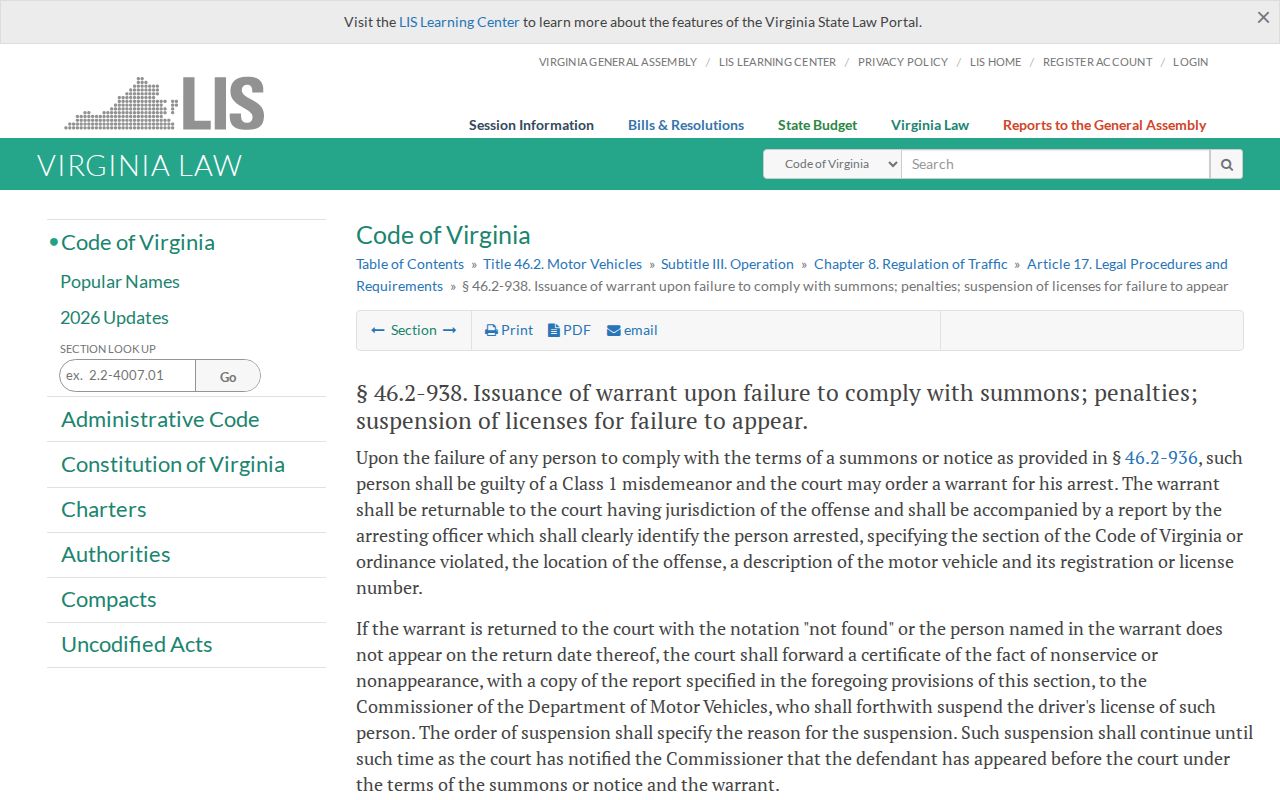
A missed date or failure to comply can lead to a warrant under §46.2-938. The court may certify the nonappearance or nonservice to DMV, and a suspension can continue until the court notifies DMV that the person appeared or complied. That is a court-compliance issue, not a driver-history service.
The law’s sequence explains why paying a ticket and clearing a warrant may be separate tasks. Ask the GDC clerk what action is required and how the court confirms compliance.
Virginia’s traffic statute explains the court notice and license process.
The GDC clerk can tell you whether a compliance notice was sent in a specific case.
Clearing an Isle of Wight County Traffic Warrant
Call the clerk before using a payment page if the case has an outstanding court event. A payment may satisfy a fine without resolving a failure-to-appear warrant, and a court may require an appearance or judicial review. No countywide traffic-warrant recall form, amnesty date, or set walk-in process was located. Ask what document or action will show the court that the requirement was met.
First ask the GDC clerk for the amount, process label, and action needed. Virginia’s court payment page links local procedures, but OCIS itself does not take payments. Do not assume that paying a balance automatically recalls a warrant. The judge may require an appearance, bond, motion, or other compliance step.
- Write down the case number and ask the clerk for the balance and the exact court action required.
- Ask whether payment, a new date, an installment arrangement, a bond, or an in-person appearance is available.
- If a warrant is active, ask whether a judge must recall it before or after payment.
- Keep the receipt or order and confirm the clerk updated the docket and any DMV notice.
Warning: Online ticket payment does not guarantee warrant recall; ask the GDC clerk whether a judge must act and whether DMV needs a separate notice.
OCIS Does Not Take Isle of Wight Payments
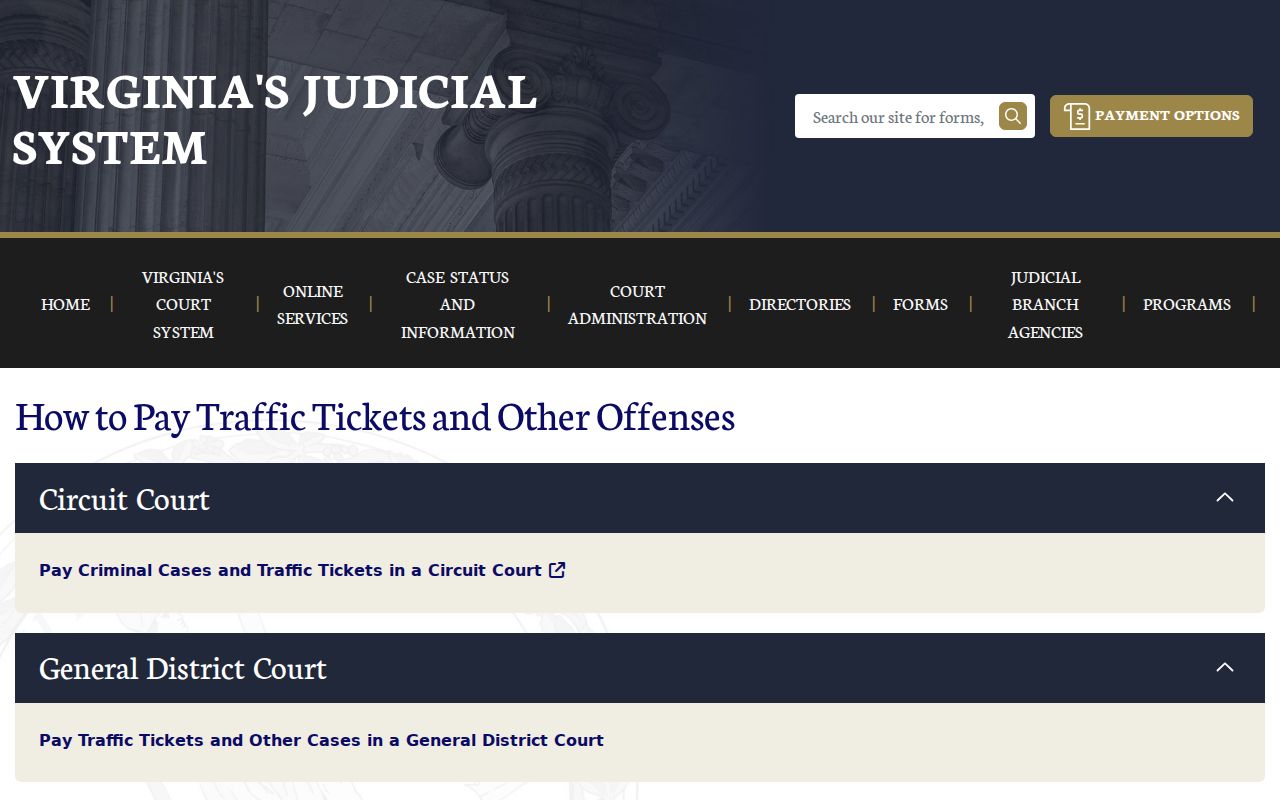
The statewide case search is not a payment portal. Virginia’s court site provides separate ticket and payment guidance, and each local court sets its own policy. The research did not find an Isle-specific traffic payment method, installment form, reinstatement amount, or warrant-lift fee.
Use the court’s current payment instructions only after confirming that payment addresses the warrant and the underlying case. A receipt is useful, but the clerk should also confirm whether the court recalled process and sent any DMV compliance notice.
The official ticket page separates payment directions from the OCIS search.
Ask the clerk to connect the payment to the correct case and process.
How Traffic Warrants Trigger License Holds
Virginia Code §46.2-938 permits a court to certify certain failure-to-appear or noncompliance cases to the Department of Motor Vehicles until the person appears or complies. That notice is a court consequence, not a separate public warrant list. Ask the clerk whether the court sent notice and what must be filed to update the court’s record. Confirm license status through the appropriate state office after the court action.
One citation can create several connected but distinct entries. The court warrant is process tied to the case. An FTA describes a missed court obligation. DMV action follows the court’s notice under §46.2-938. Ask the clerk which item remains open and what proof of compliance it sends.
| Mechanism | What Triggers It | What It Does |
|---|---|---|
| Traffic warrant | Missed traffic date or failure to comply | Court process tied to the citation |
| Failure to appear | Missed a court appearance | FTA event that may lead to further process |
| License suspension notice | Court certification under state law | DMV action until court reports appearance or compliance |